
Fan vs. Dehumidifier vs. Heater: Which Dries Laundry Better? (Practical Comparison)
Share
Many people search for "drying laundry faster test" or ask themselves: Is a fan enough? Is heating useful? Or do you need a special solution?
In this post, we compare three common methods for drying laundry indoors – fan, heating, and HEYDRY – based on typical everyday situations.
Note: This is a practical comparison based on physical principles and typical application scenarios – not a standardized laboratory test.
Why does laundry dry faster at all?
Three factors are crucial:
- Air movement – transports moisture away
- Temperature – warm air absorbs more moisture
- Evenness – stagnant moisture prolongs drying time
1. Drying laundry with a fan
A fan increases air movement in the room. This allows moisture to be transported away from the surface of the clothing more quickly.
Advantages:
- inexpensive purchase
- flexible to use
Disadvantages:
- air flow only局部 (localized)
- not all areas of the clothes rack are reached evenly
2. Drying laundry on the heater
Heat accelerates evaporation. Therefore, laundry on or directly next to the heater often dries faster.
Advantages:
- fast localized drying
Disadvantages:
- uneven drying
- higher heating costs
- stress on delicate fabrics due to heat
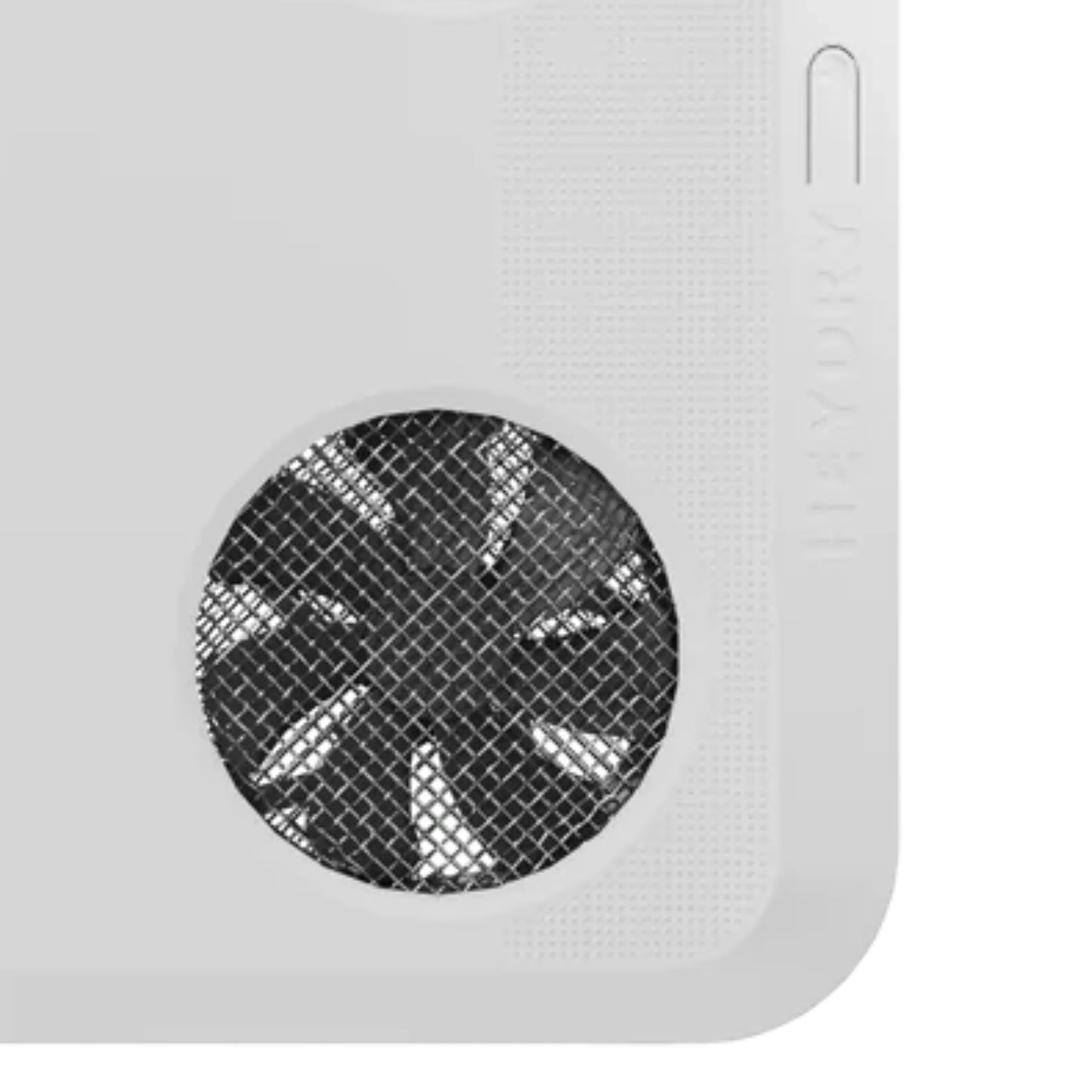
3. Drying laundry with HEYDRY
HEYDRY is placed under the clothes rack and ensures targeted air circulation from below.
Typical characteristics:
- even air distribution over the entire rack
- no heat generation
- very low power consumption
Direct comparison
| Method | Air movement | Energy consumption | Evenness |
|---|---|---|---|
| Fan | Localized | Low to medium | Limited |
| Heater | Heat, little movement | High (indirect) | Often uneven |
| HEYDRY | Targeted from below | Very low | Even airflow |
Tip: A combination of light ventilation and targeted air movement directly at the clothes rack is particularly effective.
Learn more about HEYDRYFAQ
Does laundry dry faster with a fan?
Yes, air movement accelerates evaporation – but often not evenly.
Is drying laundry on the heater harmful?
High heat can stress delicate fabrics and negatively impact the indoor climate.
What saves the most electricity?
Pure air drying consumes no electricity. Supporting air circulation requires very little energy compared to heating or tumble drying solutions.
Conclusion
While the heater relies on temperature and a fan swirls air, HEYDRY works directly at the clothes rack with even air movement. Which method is best depends on the household and the desired energy consumption.