
Is a tumble dryer an electricity guzzler?
Share
The Big Cost Check 2026
Many households ask themselves: "Is a tumble dryer a power guzzler?" – and the honest answer is: yes, in many cases. Especially older appliances or classic dryer models cause significantly higher electricity costs than many expect. However, there are differences between dryer types – and now also alternatives that can be much more sensible for certain households.
How much electricity does a tumble dryer really consume?
The electricity consumption of a tumble dryer depends heavily on the appliance type and program duration. Typical guidelines per drying cycle (7–9 kg laundry):
- Vented dryer: approx. 3.5–4.5 kWh per load
- Condenser dryer: approx. 2.5–3.5 kWh per load
- Heat pump dryer: approx. 1.2–2.0 kWh per load
At an electricity price of about 32–40 cents per kWh, the following costs arise:
- Vented dryer: approx. €1.20–€1.80 per drying cycle
- Condenser dryer: approx. €0.80–€1.40 per drying cycle
- Heat pump dryer: approx. €0.40–€0.80 per drying cycle
Calculated annually (with 2–3 drying cycles per week), electricity costs quickly add up:
- Vented dryer: approx. €250–€300 per year
- Condenser dryer: approx. €180–€220 per year
- Heat pump dryer: approx. €80–€150 per year
Why even modern dryers cause noticeable electricity costs
Even modern heat pump dryers are considered energy-efficient. Nevertheless, they have some systemic disadvantages:
- long program runtimes of often 2–3 hours
- technical wear and tear due to filters, sensors, and heat exchangers
- heat stress for delicate textiles
- oversizing for small laundry loads
Especially in single-person or two-person households, often only a small amount of laundry is dried – for this, classic drum dryers are often not optimally designed technologically.
HEYDRY: A very energy-efficient alternative without heat
If you dry your laundry on a drying rack anyway or don't have space for a large dryer, you can opt for a different solution.
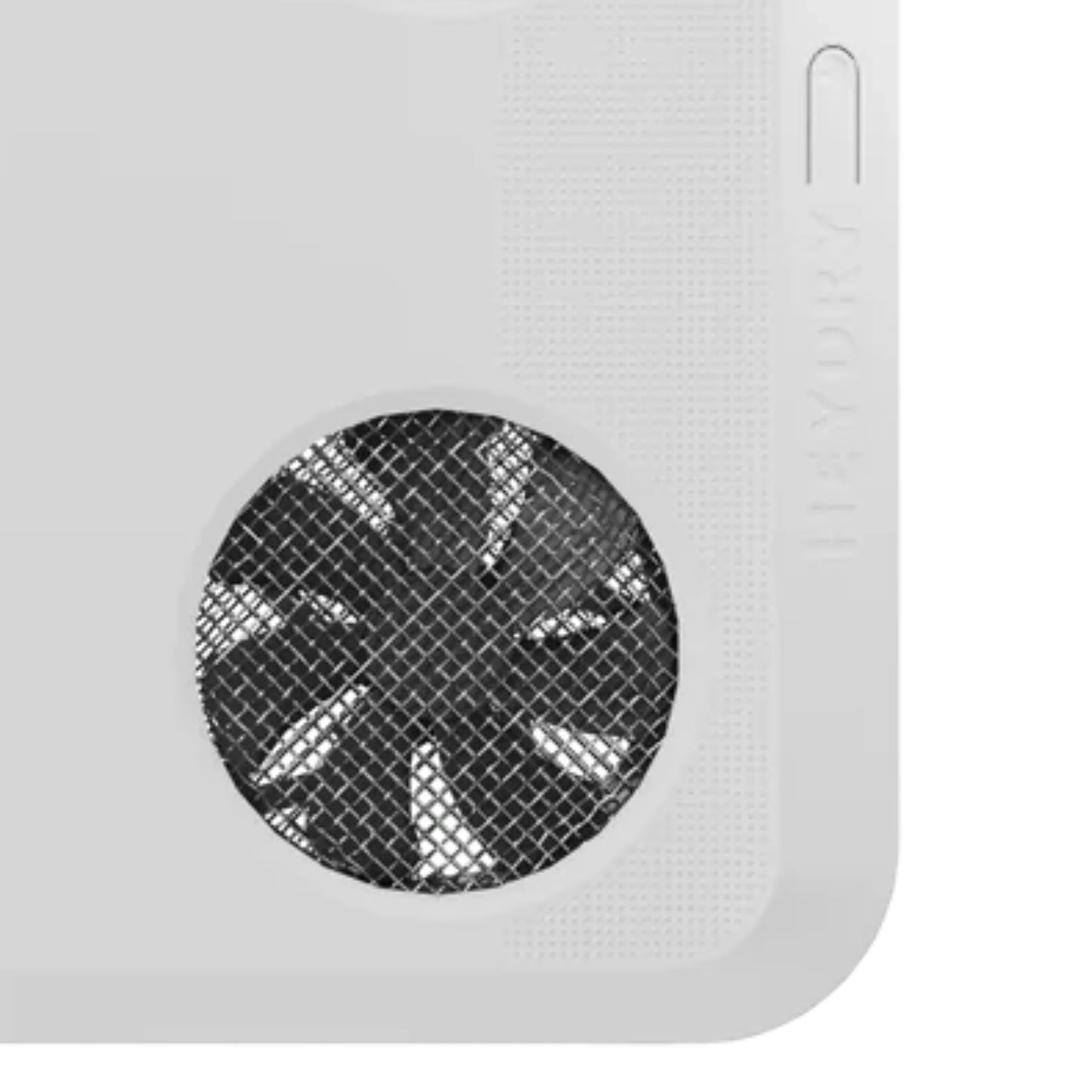
HEYDRY works without a drum and without a heating element. Instead, the moist air is specifically extracted – with very low energy consumption.
- Very low power consumption (significantly lower than classic dryers)
- No heat → particularly gentle on textiles
- Significantly reduced drying time compared to normal air drying
- Compact design – ideal for apartments and small rooms
Classification: Tumble dryers count – depending on usage – among the more electricity-intensive household appliances. HEYDRY manages with a very low energy demand.
Discover HEYDRYWho benefits from a tumble dryer – and who doesn't?
- Families with large laundry volumes: A heat pump dryer can be sensible.
- Single and two-person households: Electricity consumption often disproportionately high.
- Small apartments: Heat and humidity can be problematic.
- Delicate clothing: Heat can affect material and fit.
For many smaller households, HEYDRY is a suitable alternative because it:
- works with very little energy
- requires no installation
- significantly speeds up air drying on the rack
- does not additionally heat up the room
FAQ
What are the monthly electricity costs of a tumble dryer?
With about 8–12 drying cycles per month, the costs – depending on the appliance type – are usually between 10 and 35 euros.
Which type of dryer consumes the least electricity?
Heat pump dryers are considered the most efficient classic dryer type, but require longer operating times.
Is HEYDRY more economical than a tumble dryer?
Compared to classic drum dryers, HEYDRY requires significantly less energy, as it completely dispenses with heat.
Can HEYDRY replace a dryer?
For single and small households, yes, in many cases. For very large laundry volumes, a drum dryer remains sensible.
Conclusion
A tumble dryer causes noticeable electricity costs in many households. Modern appliances are more efficient than before but often remain oversized, especially for small households.
HEYDRY shows another option: quick drying on the clothes rack – without heat, with very low energy consumption, and without space problems.
Classification: HEYDRY is not a classic drum dryer but a solution to speed up drying on the clothes rack. Compared to normal air drying, HEYDRY significantly shortens the drying time but still requires time – however, with considerably less energy consumption than conventional dryers.